
Search Results for: World Trade Organisation
10 results out of 13136 results found for 'World Trade Organisation'.
EBL WHITE PAPER CONCLUSIONS AND ANALYSIS
Today, carriers are driving eBL adoption and in many ways have harvested the low-hanging fruit of early adopters. However, the challenge now is to cross the chasm and pave the way to widespread adoption.
What is needed is a clear new value proposition for customers to adopt eBL.…
INDIA ENERGY MAJOR EXPANDS BIOGAS SERVICES AND GOVERNMENT DEVELOPS RENEWABLE ENERGY
India’s struggling biofuel industry may finally be picking up as the country’s oil refining major, Reliance Industries Ltd, announcing an Indian Rupees INR650 billion (USD7.72 billion) investment plan to set up 500 compressed biogas (CBG) plants over the next three years in the southern state of Andhra Pradesh.…
DUTCH HIGHER EDUCATION FUNDING FEARS INTENSIFY AS CALLS TO REVERSE CUTS ARE REJECTED
The Dutch higher education community has condemned massive cuts to the sector’s budget and caps on international student numbers, after the country’s ruling politicians rejected calls to rethink its controversial structural reforms.
On 27 November (2024), in a vote in the Dutch House of Representatives (Tweede Kamer), the Netherlands’ right wing four-party coalition led by Independent Prime Minister Dick Schoof supported a proposal spearheaded by Dutch Minister of Education, Culture and Science, Eppo Bruins of the New Social Contract party, to cut education funding by approximately EUR2 billion – half of which is earmarked for higher education – despite growing pressure from opposition parties who are threatening to block the plans in the Dutch Senate (Eerste Kamer) (https://www.dutchnews.nl/2024/11/coalition-stands-firm-over-e2bn-education-cuts-despite-warnings/…
IMPACT OF MYANMAR'S CONFLICT ON THE CLOTHING AND TEXTILE INDUSTRY
The ongoing conflict in Myanmar, as its military government loses control over territory to rebel groups, is severely affecting the country’s clothing and textile industry. This is especially in the central Burman region, where a majority of the sector’s factories are located.…
COTTON PRODUCERS PUSHED TOWARDS MORE SUSTAINABLE MANUFACTURING
The global cotton supply chain is expected to be impacted by extreme weather events, trade disputes, geopolitical tensions, increasing regulation and more complex shipments in 2025, but traceability and innovation might help to reinvent the sector, experts have said.
According to the US department of agriculture, “2024/25 global cotton consumption is forecast at 115.2 million bales (…) more than 9 million bales below the record level witnessed four years ago”, thanks to more production and consumption of man-made fibres (1).…
CRISIS AFTER CRISIS FOR LEBANESE UNIVERSITIES
The nearly two-month long Israeli military attacks on Lebanon, an escalation of a year-long conflict between Israel and Lebanese Shia militant group Hizbullah, has hit the country’s higher education sector hard. The impact is all the worse given Lebanon’s universities and colleges have been struggling with financial and economic problems for the past five years.…
ESWATINI GOVERNMENT PULLS THE PLUG ON SPONSORING HUMANITIES STUDENTS
The government of Eswatini has stopped scholarships for bachelor of arts (BA) in humanities degrees in the country’s key public HE institution, the University of Eswatini (UNESWA), with effect from the 2025/2026 academic year.
Prospective and current students who were hoping to secure public financial assistance for BA courses such as English, geography, history, religious studies and African languages.…
FASHION’S FIVE-YEAR COUNTDOWN
Fashion retailers worldwide have publicly committed themselves to achieving ambitious sustainability goals, ranging from reduced emissions to greater circularity of materials through more effective recycling. Some of these goals have been adopted from external sources, such as the United Nations Sustainable Development Goals (UN SDGs) (https://sdgs.un.org/goals…
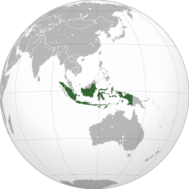
ASIAN PAINT REGULATORY ROUND UP – INDONESIAN EXTERIOR PAINT STILL USES LEAD, WARNS WORLD BANK
EU HITS CHINA-BUILT BEVS WITH TARIFFS UP TO 35.3% OVER STATE SUBSIDIES
The European auto sector is uneasy about the 35.3% countervailing duties that the European Union (EU) has imposed on China-built BEVs on top of the standard 10% import tariff. While they were imposed in response to what the EU executive, the European Commission, claims are unfair state subsidies throughout Chinese supply chains that undercut the bloc’s own European Automobile Manufacturers’ Association (ACEA) has declined to comment.…