International news agency
International News Services archives articles supplied to clients one year or more after initial publication. These articles are protected by a password and not made available to readers without permission from clients. They are used as a background resource by agency journalists. Upon client requests, International News Services will remove such articles from the archive or not upload them in the first place. They are included to demonstrate the breadth of topics undertaken by the agency and also to help promote clients’ coverage.

Search Results for: China

10 results out of 4010 results found for 'China'.

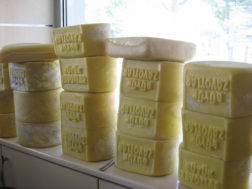
Cheese (Kars, Turkey) by Sasha India

TÜRKIYE DAIRY PRODUCTION FALLS AS INDUSTRY STRUGGLES WITH INFLATION AND DEPRECIATING LIRA
Türkiye is one of the top 10 milk producers worldwide, according to the Turkish National Dairy Council (Ulusal Süt Konseyi - USK) but the country’s dairy sector has been impacted over the past two years by high inflation and the depreciation of the Turkish lira (1). Production is slowly rebounding, with demand driven by the country’s growing population and new export markets.  

“Until the Covid pandemic the dairy sector was growing really well, then it started to decrease due to inflation and other issues, and has not really recovered,” said Shirley Kaston, co-founder of the Kök Projekt, a food start-up accelerator and consultancy in Istanbul.  
Read more
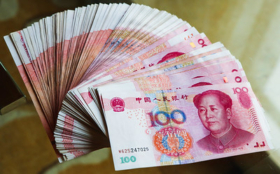
Chinese Yuan. Photos Credit: Mussi Katz

CHINA CRACKING DOWN ON WEAK AUDITING OF ACCOUNTING CRIME

Major companies in China are under tightening scrutiny for accounting fraud, with major audit firms facing punishing penalties for turning blind eyes. Keith Nuthall, Jens Kastner and Sara Lewis report. 

The Chinese auditing unit of accounting giant PwC has been fined a record Chinese Yuan Renminbi CNY441 million (USD62.7 million) and banned from auditing in mainland China for six months after a regulator concluded it had “covered up and even condoned” fraud.

Read more
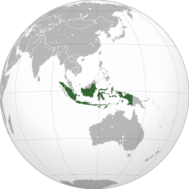
Image Credit: https://commons.wikimedia.org/wiki/Category:Globes_showing_Indonesia#/media/File:Indonesia_(orthographic_projection).svg

ASIAN PAINT REGULATORY ROUND UP – INDONESIAN EXTERIOR PAINT STILL USES LEAD, WARNS WORLD BANK 

A World Bank study released in October revealed that 58% of Indonesian households with visible interior paint still use products containing lead, posing significant health risks, especially to children under five. An estimated 10.2 million young Indonesian children live in homes with lead-based paint, with 14% of them at heightened risk from deteriorating paint conditions, according to the report.

It said 77% of popular paint brands on sale in Indonesia exceed safe lead levels, contributing to long-term health issues such as reduced IQ, neurological disorders, and cardiovascular problems. 
 
The country’s industry ministry denied the report’s claims, stating that Indonesia’s decorative paints meet national standards, which limit lead content to below 90 parts per million (ppm), in line with World Health Organisation (WHO) recommendations. 
Read more

ASIAN PAINT REGULATORY ROUND UP – CHINA CRITICISES EUROPEAN TITANIUM DIOXIDE ANTI-DUMPING DUTY
The China National Coatings Industry Association has complained that a European Union (EU) anti-dumping investigation into Chinese exports of titanium dioxide have sparked anti-dumping tariff rates far higher than expected. The provisional anti-dumping rates announced by the European Commission in July were 39.7% for the Longbai Group, 14.4% for Anhui Jinxing Titanium Dioxide Group, 35% for other responding companies, and 39.7% for other non-responding companies.

The China Coatings Industry Association warned that if this tax rate is implemented, it will seriously affect the exports of Chinese titanium dioxide companies and the future development of the industry. 
 
*The Indonesian Paint Manufacturers Association (APCI – Asosiasi Produsen Cat di Indonesia) has worked with the government to launch a high school programme, promoting and explaining paint technology.  
Read more
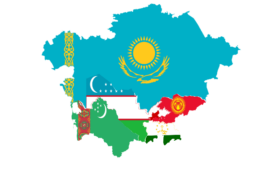
Countries of central Asia. Image Credit: https://commons.wikimedia.org/wiki/File:Flag_map_of_central_asia.png

ASIAN PAINT REGULATORY ROUND UP – VIETNAM EXPANDS IMPORT SAFETY CONTROLS TO ALL CHEMICAL INPUTS 

Vietnam’s ministry of industry and trade (MOIT) has released a draft amendment to the country’s Law on Chemicals. The draft amendment stipulates that all chemicals, including paint and coating ingredients, must be declared when imported through Vietnam’s National Single Window Information Portal.

Under current regulations, only certain chemicals must be declared when imported, leading to the possibility of many dangerous and toxic chemicals imported into Vietnam. The MOIT explained that this weakness was especially relevant for new chemicals imported into Vietnam for the first time, impeding the government’s ability to update the list of chemicals that must be declared, hindering the identification of new chemicals, needed to apply management and safety procedures. 
Read more

GLOBAL CORRUPTION LEVELS REMAIN HIGH, WITH CLEAN-UP EFFORTS STAGNATING SAYS TRANSPARENCY INTERNATIONAL GLOBAL CORRUPTION LEVELS REMAIN HIGH, WITH CLEAN-UP EFFORTS STAGNATING SAYS TRANSPARENCY INTERNATIONAL


Transparency International’s 2023 Corruption Perceptions Index (CPI) (1) released on Tuesday (January 30) has concluded 122 of 180 countries worldwide scored below 50 on perceived levels of public sector corruption from 0 (highly corrupt) to 100 (very clean). This number shows how “corruption levels remain stagnant globally” – as the same number was reported last year (2022).…

Read more

INNOVATORS FUEL POLAND’S EXANDING FOOD AND DRINK MARKET AND INDUSTRY


The food industry is one of the most important and fastest growing branches of the Polish economy. With 60% of its land arable, Poland is the sixth largest agri-producer in the European Union (EU), according to the US Department of Agriculture (USDA).…

Read more

SUEZ/RED SEA CRISIS CAUSING DISRUPTION TO CLOTHING TRADE AND MAY PROMPT SOURCING SHIFTS


Disruptions to the supply chain in the Red Sea are driving up shipping costs for the clothing and textile sector, causing alternative routes to be used, and may result in longer-term shifts in sourcing as well as logistics, if the crisis continues.…

Read more

EGYPT CLOTHING EXPORTS DOWN BECAUSE OF RED SEA CRISIS – BUT EXPORTERS OPTIMISTIC ABOUT 2024 H2 REBOUND


The disruption to shipping through the Red Sea by Yemen’s Houthi militants is having a mixed impact on the Egyptian garment exporting industry – a key European near-sourcing hub. On the one hand shipping rates have increased, and the import of raw materials from east Asia has been impacted; while on the other hand, there has been an uptick in orders from European clients to take advantage of Egypt’s proximity to Europe, without running the gantlet of Houthi attacks.…

Read more

POST-COVID RUSH TO NEARSHORING TEMPERED BY WEAK CAPACITY AND CHINESE EXPERIENCE, SAY EXPERTS


Predictions that a post-pandemic surge in nearshoring would follow clothing brand fears about volatile supply chains have only been partly realised. Inadequate advances in automation, limited raw material supplies, lack of appropriate infrastructure and persistent high costs have limited the ability of many near-sourcing industrial hubs close to Europe and north America to grab market share from Asia.…

Read more