
Search Results for: Switzerland
10 results out of 984 results found for 'Switzerland'.
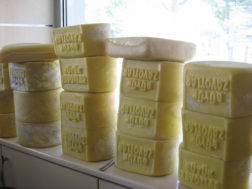
TÜRKIYE DAIRY PRODUCTION FALLS AS INDUSTRY STRUGGLES WITH INFLATION AND DEPRECIATING LIRA

CHEMICAL REGULATION DILEMMA FOR NEW UK GOVERNMENT
When the UK left the European Union (EU) on 1 January 2021, it also left the EU’s comprehensive REACH chemical control system, which was formally replaced by a UK REACH system. This mirrored EU REACH, grandfathering existing registrations and restrictions to the national system, although GB companies lost access to EU databases run by the European Chemicals Agency (ECHA).…
EUROPEAN TEXTILE MANUFACTURERS CALL FOR COMPETITIVENESS TEST TO KEEP INDUSTRY CREATIVE
European textile companies increasingly overburdened by regulation say each new piece of European Union (EU) regulation they face should be assessed on the grounds of how it helps industry succeed in an increasingly competitive market. They say more should be done to boost a sector that employs 1.3 million workers in 192,000 companies and provides more than EUR67 billion’s worth of exports to the 27-country bloc, according to the European Apparel and Textile Confederation (Euratex).…
EU ROUND UP – MINISTERS AND MEPS APPROVE NEW CHEMICAL CLASSIFICATION LAW
Paint and coatings manufacturers and traders within the European Union (EU) are facing changes to the key EU regulation on the classification, labelling and packaging of chemicals (the CLP regulation). The European Parliament, and the EU Council of Ministers have struck a deal on updating the existing 2008 law, aimed at increasing protection of human health and the environment, while easing access to up-to-date information on chemicals hazards and simplified labelling rules.…
TÜRKIYE CLOTHING EXPORTERS GACEING TOUGH TIMES IN THE SHORT TERM – BUT RECOVERY COULD COME SOONTÜRKIYE CLOTHING EXPORTERS GACEING TOUGH TIMES IN THE SHORT TERM – BUT RECOVERY COULD COME SOON
Türkiye’s garment and cotton sectors have suffered from a slowdown in demand in American and European markets, with more than 1,000 of the country’s garment manufacturing companies closing in 2023. Also, more than 85,000 employees within the sector in Türkiye were laid off this year, say industry sources.…
VEGAN CHOCOLATE BOOMS WORLDWIDE, WITH BRANDS INVESTING IN QUALITYVEGAN CHOCOLATE BOOMS WORLDWIDE, WITH BRANDS INVESTING IN QUALITY
With consumers becoming increasingly health conscious worldwide, demand for vegan chocolate, replacing dairy ingredients with plant-based materials, is growing fast.
According to US-based Grand View Research, the global vegan confectionery market – dominated by chocolate – is anticipated to generate USD2.62 billion in annual revenues by 2030, expanding at a compound annual growth rate (CAGR) of 9.9% from 2023’s USD1.23 billion.…
AL AIN UNIVERSITY PAVES THE WAY FOR MORE QUALITY EDUCATION AND SUSTAINABILITY IN UAE
The United Arab Emirates’ (UAE) private Al Ain University (AAU), located in the oasis city with the same name, is leading the way on sustainable development among local universities, through initiatives to boost quality education and global and national partnerships.
AAU, in Abu Dhabi emirate, on the Oman border, of the United Arab Emirates (UAE), was considered the best UAE university in the 2023 Times Higher Education Impact Ranking (https://www.timeshighereducation.com/impactrankings#!/length/25/locations/ARE/sort_by/rank/sort_order/asc…
NEW EU IP RULES WILL BOOST RESEARCH, BUT CONCERNS OVER COMPULSORY LICENSING REMAIN, SAY EXPERTS
THE EUROPEAN Union (EU)’s proposed new intellectual property (IP) rules to safeguard inventions (https://www.consilium.europa.eu/en/press/press-releases/2023/09/25/intellectual-property-council-adopts-two-positions-on-designs-protection-legislation/) will cut red tape and boost technology transfer, university research experts have told University World News (UWN). They praise the increased opportunity to protect new products.…
GLOBAL STUDENT BODY ENCOURAGES SUSTAINABILITY CHANGE INSIDE AND OUTSIDE WORLD’S CAMPUSES
A global student body is encouraging universities and colleges to lead societal change that pushes behavioural norms towards more sustainable practices, reducing greenhouse gas emissions, as this summer’s record heat https://www.nasa.gov/news-release/nasa-announces-summer-2023-hottest-on-record/#:~:text=The%20summer%20of%202023%20was,(GISS)%20in%20New%20York. Underlines climate change.
Students Organising for Sustainability (SOS) International was launched in Denmark during 2019 and has since grown to be an alliance of 27 national and international organisations, working together to promote sustainability on campus, at home and at work.…
RUSSIA SANCTIONS ARE UNPRECEDENTED – BUT SO IS THE LEVEL OF EVASION
The invasion of Ukraine by Russia has sparked an unprecedented level of international sanctions. However, it has also caused an unprecedented wave of sanctions evasion.
June’s (2023) plenary of the Financial Action Task Force (FATF) had a clear message for the global anti-money laundering community, which includes organisations fighting sanctions evasion: “FATF reiterates that all jurisdictions should be vigilant to current and emerging risks from the circumvention of measures taken against the Russian Federation in order to protect the international financial system.”…